
Nonprofit Return on Investment: How to Calculate and Use It

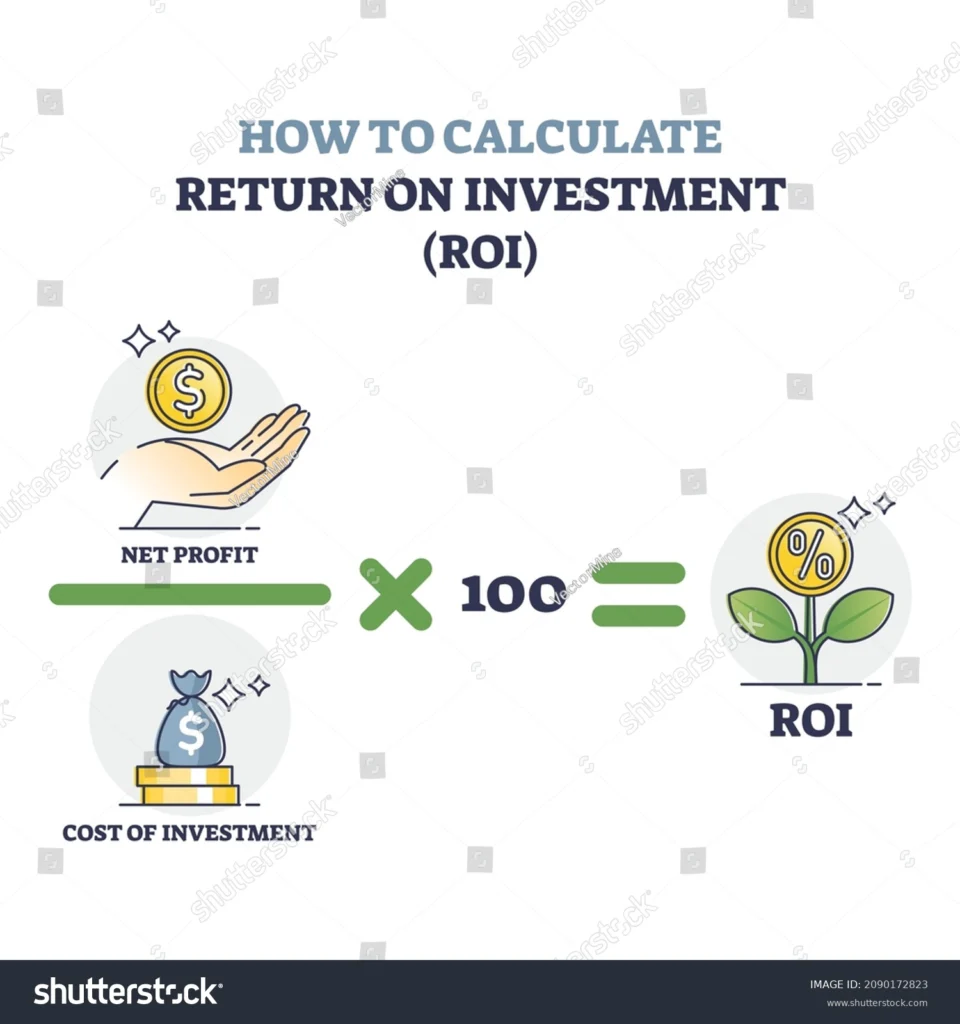
Nonprofit return on investment measures the net benefit of money or time spent on a program, campaign, or operation. For nonprofits, ROI is not profit: it is a ratio of net return to cost, usually shown as a percentage, and it should be read alongside mission impact rather than by itself.
What Does Return on Investment Mean for a Nonprofit?
Return on investment for a nonprofit is a way to compare what a program, campaign, or operation produced against what it cost. In a for-profit business, ROI often points to profit. For a nonprofit, ROI is not distributed to owners. It describes whether resources were used efficiently enough to justify repeating or scaling the activity.
A nonprofit can post a positive ROI on a fundraising campaign and still need separate evidence that the program itself worked. The IRS minimum investment return rules add a different measure for private foundations. That measure, commonly called the 5% rule, is an annual payout requirement rather than a performance ratio.
ROI works best when the return can be expressed in dollars, such as funds raised or costs avoided. When outcomes are not monetary, mission-level measures are needed.
How to Calculate Nonprofit ROI: Formula and Steps
The basic nonprofit ROI formula is: (gross return − investment cost) ÷ investment cost × 100. Gross return is the total amount received, saved, or generated. Investment cost is the full cost of producing it. The result is a percentage. Zero means the activity broke even. Above zero means it produced more than it cost. Below zero means it cost more than it returned.
Step 1: Identify all direct costs
Direct costs are expenses tied to the specific activity. Examples include event venue rental, printing, postage, staff time billed to the campaign, and software used only for that program. When staff split time across programs, estimate the portion spent on the activity and record the basis for that estimate.
Step 2: Add indirect costs
Indirect costs include a share of rent, utilities, technology, and administrative time that support the activity without being billed to it. Excluding them inflates ROI. A common shortcut is to apply an indirect cost rate, such as the rate a nonprofit uses in its federal grant proposals.
Step 3: Calculate the return
Return is the money the activity brought in or the cost it avoided. For a fundraising campaign, that is gross contributions tied to the campaign. For an operational change, it may be the value of hours saved or errors avoided. For a program, return can be the value of services delivered or the cost avoided by preventing a problem. Those figures need a documented method.
Step 4: Apply the formula
Subtract total investment cost from gross return, divide by investment cost, and multiply by 100. The same formula works for fundraising ROI, program ROI, and operational ROI. It works as long as costs and returns are defined the same way each time. A negative result means the activity spent more than it returned. That finding is useful for deciding what to fix, not proof that the activity should stop.
A Worked Example for a Small Nonprofit
A small nonprofit runs a fall appeal. The development director estimates costs before launch and records returns as gifts arrive. The figures below are placeholders, not sourced from a real organization.
| Item | Amount |
|---|---|
| Staff time and design | $4,000 |
| Printing and postage | $6,000 |
| Software and list rental | $5,000 |
| Total investment | $15,000 |
| Gross return (gifts) | $21,000 |
| Net return | $6,000 |
| ROI | 40% |
Net return is $21,000 minus $15,000, or $6,000. Dividing $6,000 by $15,000 gives 0.40, then multiplying by 100 gives a 40% ROI. That means each dollar spent returned $1.40 before accounting for any broader mission value.
The same math applies to a program where a $15,000 investment prevents $21,000 in costs, but the interpretation changes. The benefit is avoided spending, not new revenue. The 40% figure is useful for comparing this fall appeal against past appeals or another campaign with similar cost definitions. It is not a rating of the program's quality. A campaign can show a strong ROI while the program it funds underperforms. That is why ROI should be reported with outcome data rather than alone.
To keep comparisons honest, the nonprofit uses the same cost categories for every appeal. Those categories are direct costs, an indirect allocation, and a documented list of gifts included. That prevents a one-time decision from flattering the result. When staff time is donated, its value can be included as an in-kind cost, but only with a consistent rate. The formula splits net return by total investment cost. If the appeal had omitted printing costs, ROI would look better on paper but less useful for management.
Where ROI Helps and Where It Misleads
ROI is clearest when both sides of the ratio are dollars. Examples include a fundraising campaign, an energy retrofit, or a software purchase that saves staff hours. It is less reliable when benefits are social, environmental, or spread over years. Social return on investment (SROI) exists for that work.
Social Value International publishes principles for SROI that put stakeholder voices and material outcomes ahead of a single ratio. ROI can also mislead when indirect costs are left out or when a long-term outcome is squeezed into a one-year return.
For grant-funded programs, ROI should sit beside program data such as people served, outcomes achieved, and feedback from participants. A single percentage cannot show whether the right people were served or whether the benefit lasted. Use ROI as a management prompt, not as the final word on impact. A program that serves few people at high cost may show low ROI. It may still be the only service of its kind in a rural county. In that case, the ratio should not decide funding alone.
The IRS 5% Rule for Private Foundation Investments
Under the IRS private foundation rules, a private foundation generally must pay out about 5% of the excess of its net investment assets each year. The payout must go to charitable purposes. The requirement is reported on Form 990-PF. The 5% rule is a payout floor, not a performance target. A foundation can spend more than the minimum and still show weak program results.
IRS rules say the exact calculation depends on asset values, indebtedness, and other factors. A foundation should work with its tax preparer on the specific figure. The 5% rule applies to private foundations, not to all nonprofits. Public charities and other exempt organizations do not face the same minimum investment return. They still must use funds for their exempt purposes.
How to Improve Nonprofit ROI
Improving ROI starts with the denominator: lower costs without cutting the activity that produces results. Then work on the numerator: raise more revenue per dollar spent or convert one-time activities into repeatable ones. Each lever should be tested against the same formula so the comparison is valid.
- Diversify revenue so a single funding source does not dominate the budget.
- Reduce fundraising costs by testing lower-cost channels and tracking cost per dollar raised.
- Improve donor retention, because returning donors usually cost less to renew than new donors to acquire.
- Track donor lifetime value so acquisition costs are read against the full relationship, not just the first gift.
- Use benchmarks such as Giving USA's annual report to compare your mix of funding sources to national patterns.
Frequently Asked Questions
Can a non-profit have investments? Yes; nonprofits may hold investments, and private foundations must meet an IRS minimum investment return.
What's the difference between profit and return on investment? Profit is money left after expenses; ROI is a ratio of net return to cost, so a nonprofit can use ROI without distributing profit.
What is the 5 rule for private foundations? IRS requires a private foundation to pay out about 5% of its net assets each year for charitable purposes.
Can I get paid to run a nonprofit? Yes; nonprofits may pay reasonable compensation, which must be reported on Form 990.
Sources: IRS Private Foundations — Minimum Investment Return; Giving USA; Social Value International. This guide is for informational purposes only and is not legal, tax, or financial advice.
Keep reading